Everyone talks about AI like it’s a productivity story. Faster emails. A calendar that runs itself. That framing is comfortable because it keeps AI in the category of tools that help you get more done and then get out of the way.
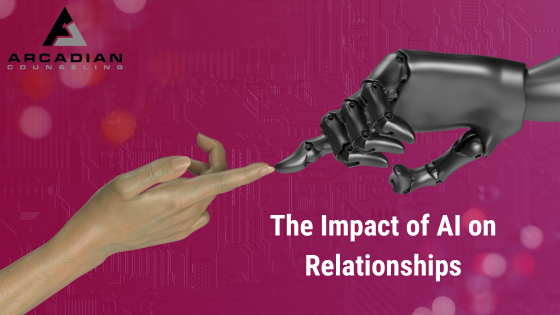
But that’s not where this is heading. AI is moving into the room where you and your partner actually live. The place where you argue. Where you go quiet. Where you decide whether to bring something up or just let it pass.
How AI Is Already Shaping Relationships

It Doesn’t Create Distance. It Finds It.
AI doesn’t create distance in a marriage. It finds the distance that’s already there and makes it wider. If the two of you already knew how to turn toward each other, it tends to tighten that instead.
It’s not a force with its own agenda. It’s a mirror with a fast response time, reflecting back whatever pattern you already bring to it.
AI as an Emotional Stand-In
The men I work with are starting to describe something they feel a little sheepish admitting. They will type out something they never quite got around to saying to their wife, and within seconds they get a response that is calm, attentive, and never defensive.
For a man who has spent his life being told to handle it himself, that can feel like the first real oxygen he has had in a long time.
I understand the pull.
But underneath that relief is something worth naming. You are quietly outsourcing a need your partner should at least be given the chance to meet. And the more practice you get with a listener who is never misattuned, the more your actual marriage starts to feel like too much work by comparison.
Not because your partner got worse. Because your tolerance for the friction of being known by an imperfect person got smaller.
Conflict Is Changing Too
AI can help a man find language he never had. A way to say something hard without it landing as an attack. That part is real.
But the same tool that helps you say what you mean can also help you build a case. It can sharpen an argument until it leaves your partner no room to respond without looking unreasonable.
That’s not communication. That’s ammunition with better editing.
The Pace Problem

Real intimacy is slow. It asks you to:
- Wait while someone finds their words
- Tolerate a silence that does not resolve right away
- Sit with a partner who processes on a different timeline than you do
AI does not run on that clock. It gives instant clarity, instant response, instant relief. And the more your nervous system gets trained on that speed, the more your partner’s very human pace starts to feel like disrespect.
Where This Actually Lands
I think it comes down to two different outcomes, depending on what was already true in the marriage before AI showed up.
- In marriages where one partner is already checked out, AI becomes a quiet refuge for the one who is starving for connection. Nothing has to happen romantically for the resentment to keep compounding.
- In marriages where both people already knew how to reach each other, AI sharpens what was already working.
Same tool. Opposite outcome. The variable was never the technology. It was the relationship it got dropped into.
The Question Worth Asking
I don’t know which one you are doing right now, and I’m not sure anyone does while they are still inside it.
But it’s worth asking yourself honestly where you’ve been going lately when things get hard at home, and what that choice has already started to cost you.
James Killian, LPC is the owner of Arcadian Counseling, a private practice in Greater New Haven, CT, specializing in helping over-thinkers, high achievers, and perfectionists reduce stress, increase fulfillment, and enhance performance — so they can move From Surviving to Thriving. He primarily works with professional men navigating high-pressure careers and meaningful life transitions. His approach blends psychological insight with real-world experience to support men in reclaiming clarity, strength, and purpose.