
Somewhere along the way, people stopped saying you seem stressed and started just describing you that way. Intense. Serious. A little hard to reach. You’ve probably started believing it yourself, treating the edge in your voice and the shortened patience as facts about who you are rather than symptoms of what you’ve been carrying. What’s actually happening has a name: survival mode, a nervous system state that was never meant to run this long, and it’s dangerously easy to mistake for your actual personality until the line between the two disappears entirely.
This isn’t a metaphor. There’s a real physiological mechanism behind it, and understanding that mechanism matters, because it’s the difference between thinking something’s permanently wrong with your character and recognizing a nervous system that’s been running in survival mode for far longer than it was built to.
What’s Actually Happening in Your Brain
Chronic stress doesn’t just make you feel tense. It measurably changes how your brain functions. Sustained stress reduces activity in the prefrontal cortex, the part of your brain responsible for impulse control, emotional regulation, and thoughtful decision-making. When that system is taxed for long enough, your brain defaults to more reactive, threat-based responses instead, the kind that prioritize speed and self-protection over patience and reflection.
This is the actual mechanism behind survival mode. The short fuse, the rigidity, the reduced interest in things that used to feel enjoyable, none of that is a character flaw showing its true colors. It’s a brain running a threat-management program because it’s been told, repeatedly and for a long time, that threat is the default state of things.
Why It Starts to Feel Like Who You Are
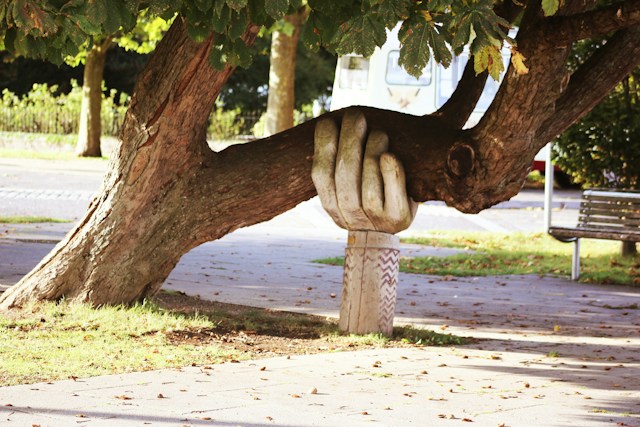
Survival mode isn’t meant to be a permanent setting. It’s designed to activate during real danger and then release once the danger passes, letting your nervous system return to baseline. Chronic stress interferes with that release. The alert state never fully shuts off, and after enough time running that way, the adaptations, the vigilance, the reduced patience, the narrowed focus, stop feeling like a temporary response and start feeling like your actual personality.
This is why so many men describe genuinely not recognizing themselves anymore. Not in a dramatic, identity-crisis way necessarily, just a quiet sense that the version of them showing up day to day, the shorter, flatter, more rigid version, has somehow become the default, while the person who used to laugh easily and stay curious about things feels like someone they used to know.
The Specific Ways This Shows Up
Survival mode tends to follow a few recognizable patterns. Irritability is usually the earliest and most visible, small inconveniences landing as disproportionately frustrating, neutral comments registering as slights. Rigidity often follows, a growing preference for control and predictability that wasn’t there before, because a taxed nervous system defaults to structure as a way of managing unpredictability it no longer has bandwidth to tolerate.
There’s also a flattening that tends to happen, a reduced interest in things that used to bring genuine pleasure, hobbies, curiosity, spontaneity, all of it narrowing toward pure functionality. And there’s often an emotional distancing, a pulling back from people, not because you’ve stopped caring, but because your brain is conserving whatever energy it has left for managing exhaustion and responsibility rather than connection.
Why This Hits Men Who’ve Built Identity Around Performance Especially Hard
This pattern shows up with particular intensity in men whose sense of worth is heavily tied to output and competence. When your identity is built around being dependable, capable, always functioning, survival mode doesn’t just change your mood. It threatens the entire structure your self-worth has been resting on, because the version of you that’s reactive, rigid, and disconnected doesn’t match the version you’ve spent years working to be.
That mismatch is often what finally forces the recognition, a moment where the gap between who you used to be and who’s been showing up lately becomes too obvious to keep explaining away as just a busy season.
This Isn’t Who You Are. It’s What’s Happening to You.

This distinction matters more than it might seem. Believing the irritable, rigid, disconnected version of yourself is simply who you’ve become invites shame and resignation. Recognizing it as a nervous system stuck in survival mode invites something more useful, curiosity about what’s actually driving it, and the real possibility that it can shift.
Burnout research backs this up directly. Chronic, unaddressed stress leads to measurable changes in emotional responsiveness and personal engagement, changes that reverse with real recovery, not just simple rest. The self you’re looking for isn’t gone. It’s buried under an overactive threat response that’s been running unchecked for too long.
Getting Your Nervous System Out of Survival Mode
This isn’t fixed by trying harder to be patient or forcing yourself to enjoy things again. It requires actually addressing the state your nervous system has been stuck in.
Notice the gap between reaction and identity. When you catch yourself being short or rigid, try naming it as a state rather than a trait. “I’m in survival mode right now” is a very different sentence than “I’ve just become an irritable person.”
Build in real recovery, not just rest. Scrolling or zoning out isn’t the same as actually signaling safety to your nervous system. Movement, genuine connection, and time away from constant demand do more to interrupt the threat response than passive downtime does.
Track what’s changed, specifically. What did you used to enjoy that you don’t anymore. Who did you used to reach for that you’ve been avoiding. Naming the specific changes makes the pattern concrete instead of vague.
Get support if this has been running for a long time. The longer survival mode runs uninterrupted, the more entrenched it becomes. Working with someone who can help address the underlying load, not just the symptoms, tends to move this faster than trying to white-knuckle your way back to yourself.
The Real You Is Still In There
Survival mode and your actual personality can feel permanently fused together after enough time, but the fusion isn’t as solid as it feels. What looks like a changed personality is very often a nervous system that’s been stuck in survival mode long past the point it was designed to run, and nervous systems, unlike personalities, are built to recover. The guy who used to laugh easier and stay curious longer isn’t gone. He’s just waiting for the alert system to finally stand down.
James Killian, LPC is a Licensed Professional Counselor and the founder of Arcadian Counseling in Connecticut. He works with professional men navigating anxiety, relationships, fatherhood, and high-pressure careers. His approach is direct, grounded, and focused on helping clients regain steadiness and self-respect during demanding stages of life while blending psychological insight with real-world experience to support men in reclaiming clarity, strength, and purpose.