

There’s a specific kind of self-doubt that shows up right before someone actually looks at their phone use honestly. I’m not addicted, I’m just busy. My job requires me to be reachable. Everyone uses their phone this much now, this is just what modern life looks like.
Every one of those statements might be partly true. Every one of them can also be a very sophisticated way of avoiding a question worth actually asking. Is phone addiction real? Or is this just the normal cost of being a functioning adult in the world right now?
Here’s the honest answer, and it’s less satisfying than a simple yes or no. Phone addiction is real, in the sense that compulsive phone use produces the same neurological and behavioral patterns as other recognized behavioral addictions. It’s been studied seriously enough that clinicians increasingly treat it as exactly that.
But not everyone who spends a lot of time on their phone is addicted to it. Conflating high volume use with addiction actually makes it harder to see the real distinction, which isn’t about hours on a screen at all. It’s about function. What is the phone actually doing for you, and can you stop when you decide to.
The Difference Isn’t How Much, It’s Why

Busy looks like using your phone a lot because your job, your family, your life genuinely requires real-time coordination. When the task is done, you put it down without much internal resistance.
Addiction looks different. It looks like reaching for the phone in moments that have nothing to do with any actual requirement, moments of boredom, discomfort, awkward silence, and feeling something close to friction or anxiety when you try not to.
The clearest diagnostic question isn’t “how many hours” at all, even though that number matters and is worth knowing. It’s this: if you decided right now to leave your phone in another room for the next three hours, what would that actually feel like in your body?
Mild inconvenience is one answer. A specific kind of restlessness, an itch you can’t quite locate, something closer to withdrawal, is a very different answer, and it’s the one that should make you pause.
Signs You’re Looking at Something More Than Busy
A few patterns worth being honest with yourself about. Reaching for your phone the instant you feel bored, uncomfortable, or emotionally activated, before you’ve even registered what you’re feeling. Losing track of time in a way that surprises you, opening the phone to check one specific thing and resurfacing twenty or forty minutes later without a clear memory of what you actually did in that stretch.
Feeling irritated or anxious when you can’t access your phone, even in situations where there’s no realistic reason anyone would need to reach you urgently. Noticing that your usage has quietly climbed over time, needing more of it to get the same sense of relief or distraction it used to provide with less.
And maybe the most telling one, having tried to cut back at some point, having failed, and having a small collection of reasons ready for why it didn’t work that had less to do with circumstances and more to do with how hard the pull actually was.
None of these individually mean someone is addicted. All humans experience some version of most of these occasionally. What matters is the pattern, the frequency, and whether the behavior is actually costing something, sleep, focus, a relationship, a sense of being present in your own life, while continuing anyway.
Why This Question Makes People Uncomfortable
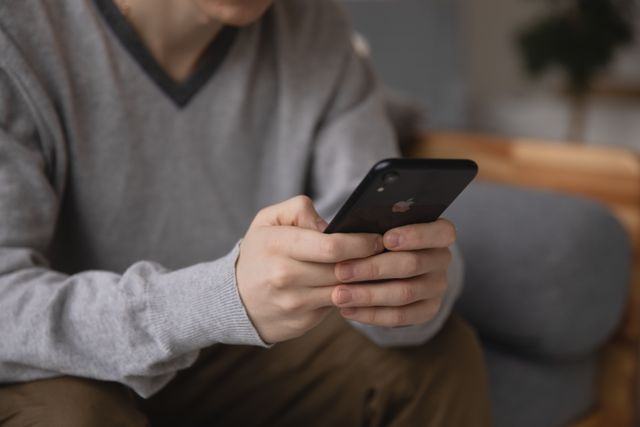
Part of the resistance to calling this an addiction, honestly, is that addiction as a word carries weight most people don’t want attached to something as mundane as a phone. Addiction sounds like rock bottom, like something dramatic and visible. Phone use doesn’t look dramatic. It looks like everyone else’s life.
Which is exactly what makes it so easy to minimize. There’s no obvious low point to point to, no single moment where things clearly went wrong. It’s a slow accumulation of small choices that quietly reroute attention, mood regulation, and connection through a device, and slow accumulation is much harder to see clearly than a dramatic collapse.
It’s also the slow, subtle, sometimes barely noticeable deterioration of a real sense of connection to the world around you and you the people in it. Quite possibly even your family and closest friends.
There’s also a real fear underneath the resistance for a lot of people, which is that naming it accurately means something has to change. The phone isn’t just a bad habit sitting off to the side of an otherwise fine life.
For a lot of people it’s become the primary tool for managing boredom, soothing anxiety, avoiding difficult feelings, and staying connected to a sense of being informed and in control.
Naming it as addiction means acknowledging that tool isn’t neutral, and that’s a harder thing to sit with than just staying busy.
What to Actually Do With the Answer
If you’ve read through all of this and recognized yourself more than you’d like to, that’s not a verdict, it’s useful information. The goal here isn’t to hand yourself a diagnosis and a wave of shame.
It’s to get honest about function rather than volume, and to start noticing, without judgment yet, what your phone is actually doing for you in the moments you reach for it. Is it information. Is it connection. Or is it, more often than you’d like to admit, a way to avoid feeling something you’d rather not feel.
That single distinction, busy versus avoidant, task-driven versus emotionally-driven, tends to matter more than any screen time number ever could. Once you can see it clearly, the actual work of changing it becomes a lot more specific and a lot more possible than trying to white-knuckle a vague resolution to just use your phone less.
James Killian, LPC is a Licensed Professional Counselor and the founder of Arcadian Counseling in Connecticut. He works with professional men navigating anxiety, relationships, fatherhood, and high-pressure careers. His approach is direct, grounded, and focused on helping clients regain steadiness and self-respect during demanding stages of life while blending psychological insight with real-world experience to support men in reclaiming clarity, strength, and purpose.