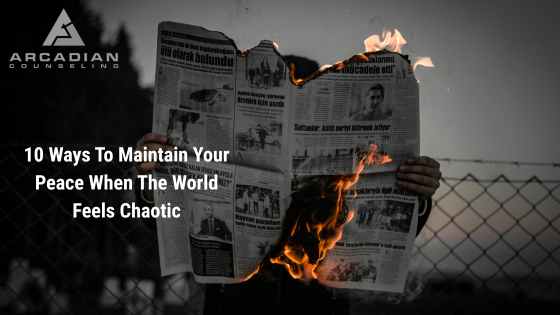
The modern news environment was not designed for psychological stability or to maintain your peace.
At any moment you can see war, disaster, political conflict, economic fear, murder, assassinations, and social outrage from every corner of the planet. Your brain processes much of this as immediate threat, even when it has no direct connection to your daily life.
Your nervous system evolved to track a small community. Not a global crisis feed that updates every minute.
When exposure becomes constant, the result is predictable. Elevated stress. Reduced focus. Poor sleep. A persistent feeling that the world is unstable and unsafe.
Maintaining your peace isn’t about ignoring reality. It’s about managing how much of it you allow into your mind.
maintain your peace admist the dumpster fire
1. Limit News Consumption to Specific Windows
Many consume news continuously throughout the day. Short checks during breakfast turn into repeated scrolling every few hours. This creates a steady stream of stress signals.
A better strategy is containment if you want to maintain your peace. Choose one or two specific times to check the news, then move on with your day.
Examples
• 15 minutes in the morning (not within the first hour of waking)
• 15 minutes in the evening (not within the last hour before bed)
You remain informed without letting news dominate your attention.
2. Separate Information From Emotional Stimulation
Much of modern media is designed to trigger strong emotional reactions. Outrage, fear, and urgency increase clicks and viewing time and line the pockets of advertisers while simultaneously crushing your soul.
That doesn’t mean you’re becoming better informed. It just means your nervous system is getting torched.
Ask a simple question when consuming news:
Did this actually increase my understanding of an issue, or did it just increase my emotional reaction?
Information expands perspective. Stimulation increases agitation.
Learn to recognize the difference.
3. Focus on What Directly Affects Your Life

Most events reported in global news will never directly affect your household, your community, or your daily responsibilities.
That doesn’t mean they aren’t important. It means your role in them is limited and level of control even more so.
When every global event becomes emotionally personal, the result is chronic psychological overload.
Awareness is healthy. Emotional immersion in everything is not.
4. Distinguish Concern From Responsibility
You can care about something without being responsible for solving it.
Many people unintentionally carry emotional responsibility for problems far outside their influence. Over time this creates a constant background feeling of helplessness.
Concern reflects empathy.
Responsibility should remain selective.
Learning the difference protects your energy.
5. Reduce Algorithm-Driven News
Social media platforms do not prioritize balance. They prioritize engagement.
Algorithms learn which stories hold your attention and then deliver more of the same. Over time your feed becomes increasingly intense and emotionally charged.
This creates the impression that the world is constantly spiraling.
Instead of relying on algorithmic feeds, choose a few direct, objective news sources and check them intentionally.
You’ll receive information without the emotional amplification.
6. Protect the First Hour of Your Day

The first information your brain processes each morning shapes your mental state for hours.
If the first thing you see is global crisis, your nervous system immediately shifts into threat mode.
Consider creating a buffer.
Spend the first part of the day doing something grounding.
Exercise
Coffee without screens
Reading
Planning your day
Allow your mind to wake up before exposing it to global events (or your email and text messages)
7. Bring Your Attention Back to Your Immediate World
Your brain naturally scans for problems to solve. When your attention covers the entire planet, the list becomes endless.
Bring the focus closer.
Pay attention to the areas where your actions actually matter.
Your household
Your work
Your relationships
Your community
When your attention returns to this scale, your mind begins to feel more stable.
8. Take Action When Action Is Possible
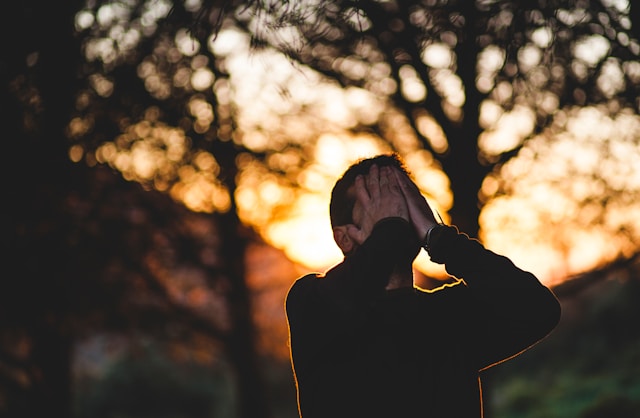
Helplessness increases anxiety.
If an issue genuinely matters to you, identify one concrete action you can take.
Support an organization doing direct work.
Volunteer locally.
Contribute financially to a cause you believe in.
Even small actions restore a sense of agency.
9. Limit Social Media as a Source of Reality
Social media platforms amplify extremes. The loudest voices and strongest reactions rise to the top.
This environment rarely reflects the experience of most people in everyday life.
When you spend too much time inside these platforms, it distorts your perception of the world.
Step outside the feed. Observe your actual surroundings. Talk with people in real life.
The world offline is often far calmer than the internet suggests.
10. Protect Your Attention Like a Resource
Your attention is limited. Every story, headline, and crisis competes for it.
If you give your attention away constantly, there is little left for the areas where your presence actually matters.
Your family.
Your work.
Your relationships.
Your personal growth.
Protecting your peace means protecting where your attention goes. Focus on what really matters.
The Bottom Line
The world has always contained conflict, uncertainty, and rapid change. What has changed is the speed and volume of information reaching you.
Your mind was never designed to be constantly absorbing every crisis happening across the globe in real time.
Maintaining your peace requires intentional boundaries around attention, information, and responsibility.
You can remain informed while still protecting your mental clarity.
The key is remembering that your influence lives closest to home.
James Killian, LPC is the founder of Arcadian Counseling in Connecticut. He works with thoughtful, driven men navigating anxiety, relationships, fatherhood, and high-pressure careers. His work focuses on helping clients move from constant mental strain toward clarity, steadiness, and a deeper sense of direction.