
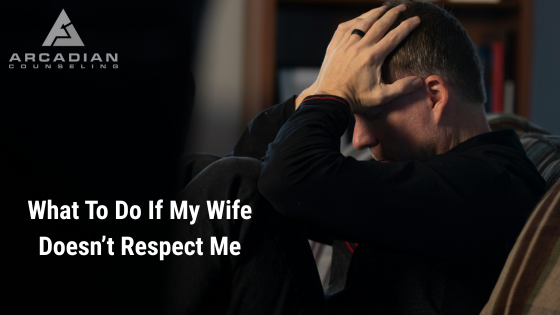
Many men come into my office asking the same question: what to do if my wife doesn’t respect me.
They don’t usually mean constant fighting or obvious cruelty. It’s more subtle. Eye-rolling. Dismissiveness. Decisions made without them. Being spoken to like a child, an employee, or an afterthought.
Over time, feeling disrespected in marriage starts to erode something deeper than satisfaction. It chips away at confidence, self-trust, and identity. Men rarely talk about this openly, but the impact is real and cumulative.
How Feeling Disrespected Affects Men
When a man feels consistently disrespected by his wife, a few predictable things happen.
First, he starts to doubt himself.
Not because he’s weak, but because chronic dismissal trains the nervous system to second-guess. You stop trusting your instincts. You hesitate before speaking. You replay conversations in your head, wondering if you were unreasonable for even having a reaction.
Second, resentment builds.
Unexpressed resentment doesn’t disappear. It goes underground. It shows up as emotional withdrawal, sarcasm, overworking, numbing behaviors, or quiet contempt. Many men don’t want to be angry husbands, so they become distant ones instead.
Third, masculinity gets distorted.
Some men shrink. They become passive and accommodating, hoping respect will return if they’re “good enough.”
Others harden. They become controlling, rigid, or emotionally unavailable. Both are responses to the same wound.
And underneath all of it is a deeper issue most men don’t want to face: self-respect starts to erode.
What to Do If My Wife Doesn’t Respect Me Starts With Self-Respect

This is where the conversation gets uncomfortable, but necessary.
If you don’t respect yourself, your wife will feel it. Even if she can’t articulate it. Even if she loves you.
Self-respect isn’t confidence. It isn’t bravado. It isn’t dominance.
It’s internal alignment.
Self-respect looks like this:
You say what you mean.
You tolerate reasonable discomfort.
You don’t abandon yourself to keep the peace.
You have standards for how you’re spoken to.
You’re willing to disappoint someone rather than betray yourself.
When those things are missing, the relationship adapts. Power shifts. Not consciously. Systemically.
And once respect erodes, it rarely comes back through pleading, explaining, or trying harder.
What Men Can Do When Self-Respect Is Low

If you’re honest with yourself and realize your self-respect is shaky, start here.
- Stop outsourcing your worth.
If your sense of value depends on your wife’s approval, you’re already compromised. Respect can’t be negotiated from a dependent position. - Tell the truth earlier.
Most disrespect escalates because men stay quiet too long, then explode or shut down. Say smaller truths sooner. Calmly. Clearly. Without defending them. - Set behavioral boundaries, not emotional ultimatums.
Boundaries aren’t threats. They’re statements of what you will and won’t engage with. For example: “I’m open to this conversation when we’re speaking respectfully. I’m not staying in it if it turns dismissive.” - Rebuild competence outside the marriage.
Men regain self-respect by doing hard, meaningful things. Physical training. Skill development. Leadership. Responsibility. Competence restores internal authority. - Get help that doesn’t infantilize you.
If therapy reinforces passivity, it will make this worse. You don’t need validation alone. You need clarity, confrontation, and structure.
If Your Wife Still Doesn’t Respect You
Here’s the hard truth.
You can’t force respect.
You can only become respectable to yourself.
Sometimes, when a man changes how he carries himself, the relationship recalibrates. Respect returns because the system has changed.
Sometimes it doesn’t.
And in those cases, the question becomes less about fixing the marriage and more about whether you’re willing to live in a dynamic that erodes your dignity over time.
That’s not a threat. It’s a reckoning.
The Bottom Line
Feeling disrespected in marriage isn’t just a relationship issue. It’s an identity issue.
If you don’t respect yourself, no strategy will fix that.
If you do respect yourself, your next steps become clearer. Even when they’re difficult.
Clarity is better than quiet resentment. Every time.
James Killian, LPC is a Licensed Professional Counselor and the founder of Arcadian Counseling in Connecticut. He works with professional men navigating anxiety, relationships, fatherhood, and high-pressure careers. His approach is direct, grounded, and focused on helping clients regain steadiness and self-respect during demanding stages of life while blending psychological insight with real-world experience to support men in reclaiming clarity, strength, and purpose.